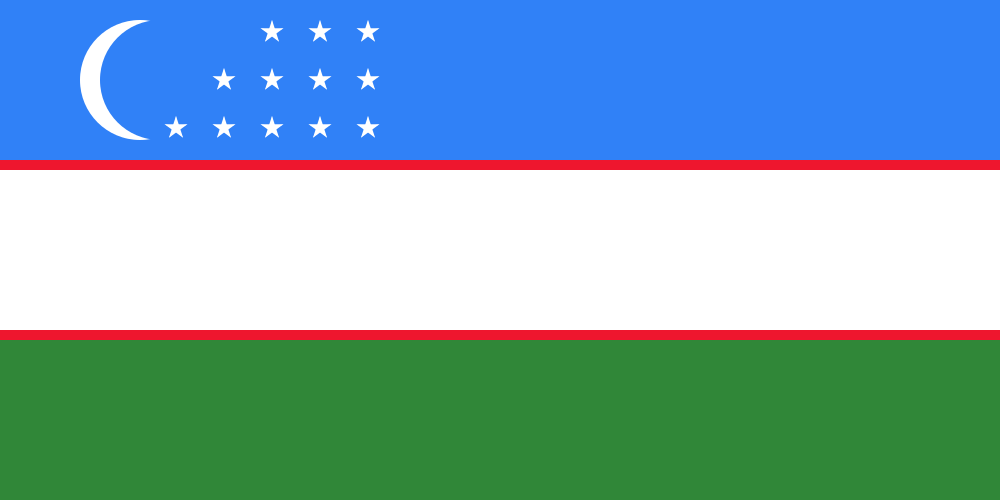
The Law “On the State Flag of the Republic of Uzbekistan” was adopted at the extraordinary VII session of the Supreme Council of the Republic of Uzbekistan on November 18, 1991.
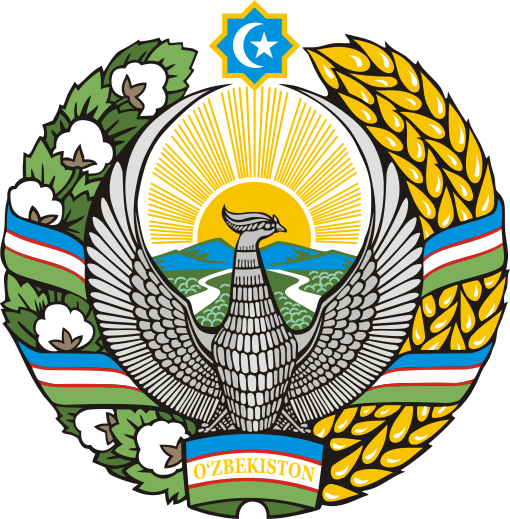
The state flag and its symbols reflect the historical connection with states that existed in the territory of present-day Uzbekistan and embody the national and cultural traditions of the republic.
The blue color on the flag symbolizes eternal sky and water, representing life. In symbolic terms, it stands for goodness, wisdom, honesty, glory, and loyalty. The flag of Amir Timur’s state was also blue.
White symbolizes sacred peace and harmony with daylight and celestial bodies. It represents purity, innocence, clarity of thoughts and dreams, and the aspiration for inner beauty.
Green symbolizes the renewal of nature. In many nations, it represents youth, hope, and joy.
Red stripes signify the streams of vital energy flowing within us.
The crescent moon is linked to our historical traditions and is simultaneously a symbol of the independence achieved.
Stars are considered spiritual and divine symbols. The twelve stars on the State Flag of Uzbekistan are directly connected to our historical traditions and ancient chronicles. The attention to twelve stars reflects the development of astronomy in the scientific thought of ancient states in the territory of Uzbekistan.
The twelve stars on the flag symbolize the antiquity of Uzbek culture and its striving for perfection and prosperity in its homeland.